

UnoPim - Odoo Import Product Model
Importing Product Models from Odoo
Overview
This import job will import all the product models from Odoo to UnoPim.
Prerequisites
Before importing product models from Odoo, ensure that you have configured your Odoo credentials in UnoPim.
Step 1: Go to Data Transfer
Navigate to the Data Transfer section from the main menu in UnoPim.
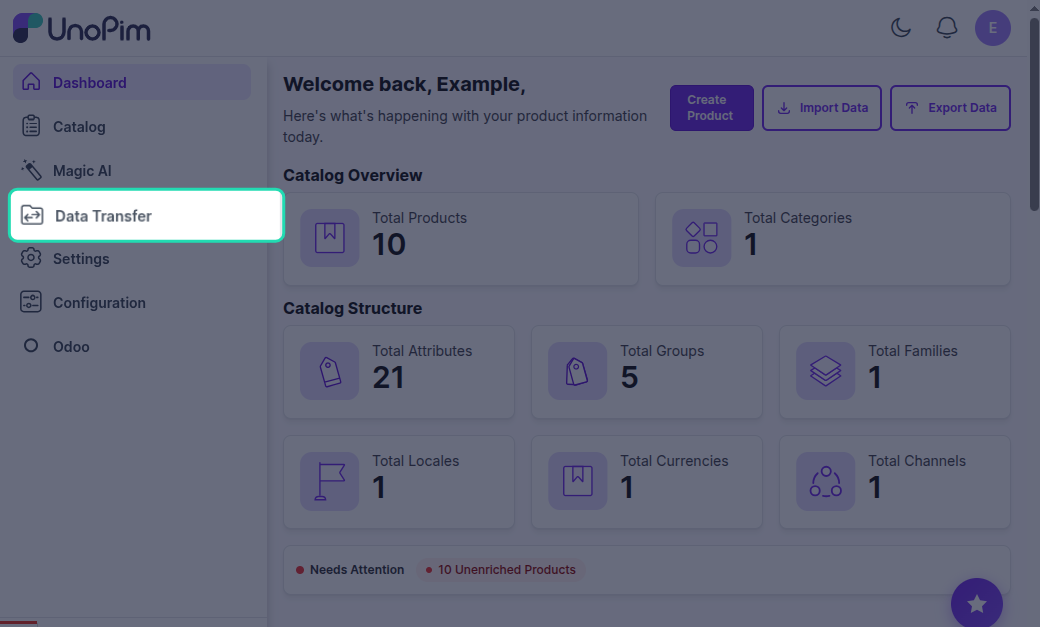
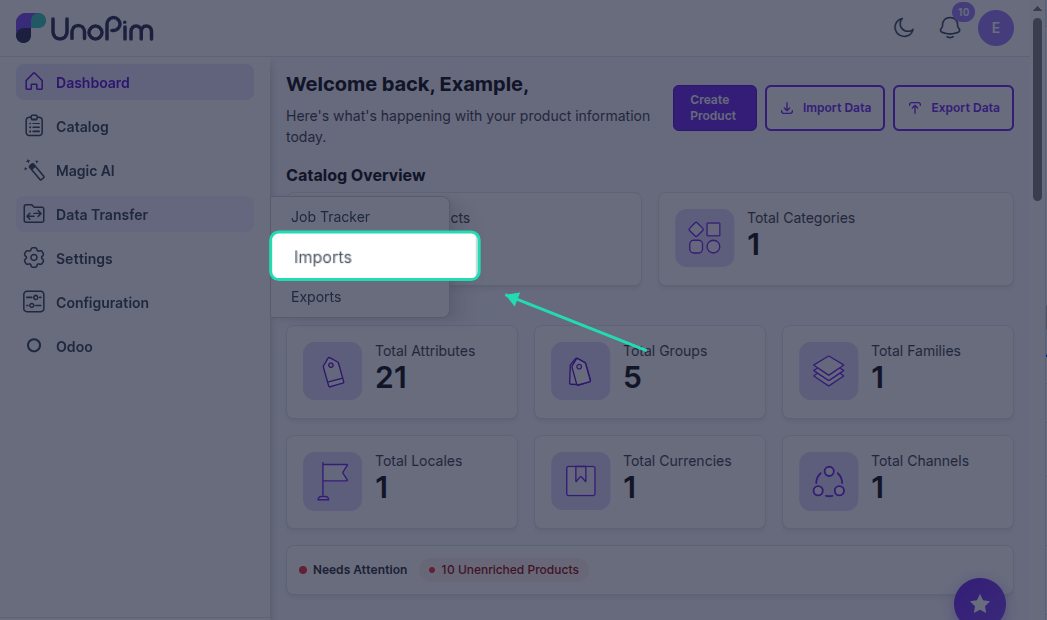
Step 2: Go to Imports
Click on Imports to view the available import options.
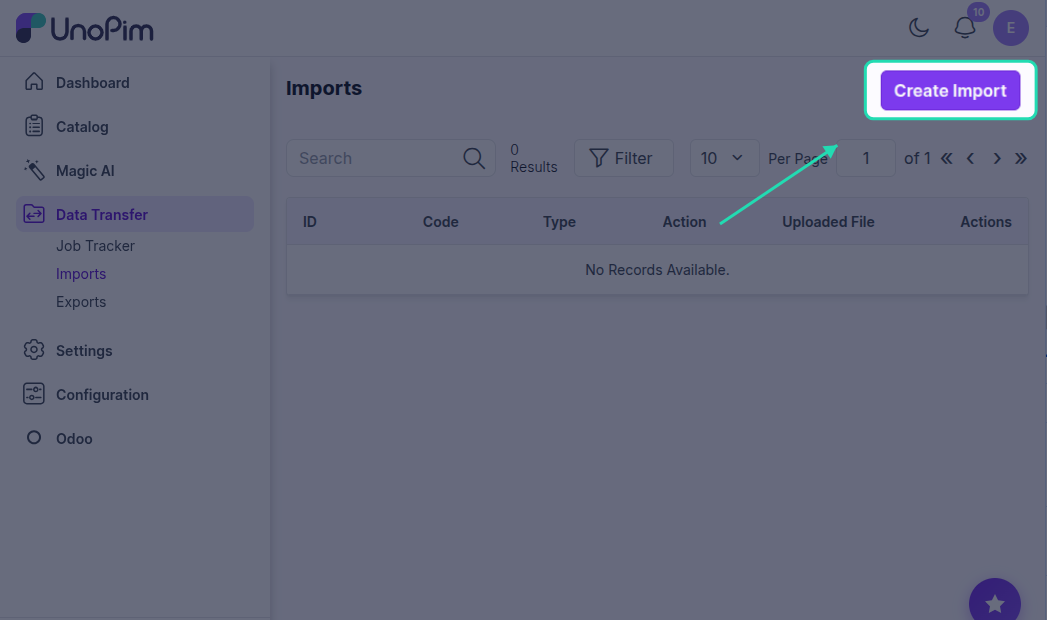
Step 3: Create Import
Click on Create Import to create a new import profile.
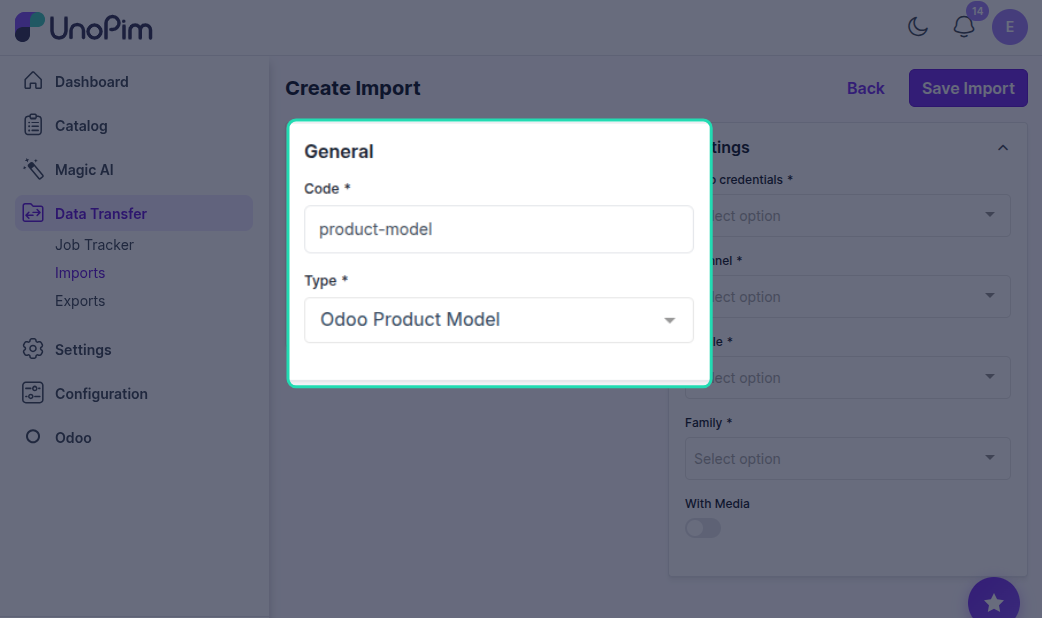
Step 4: Enter Code and Select Type
In the General section, configure the following:
Code
Enter a unique code for your import profile. This code will help you identify the import profile.
Example: odoo_product_model_import
Type
In the Type field, select Odoo Product Model from the dropdown menu.
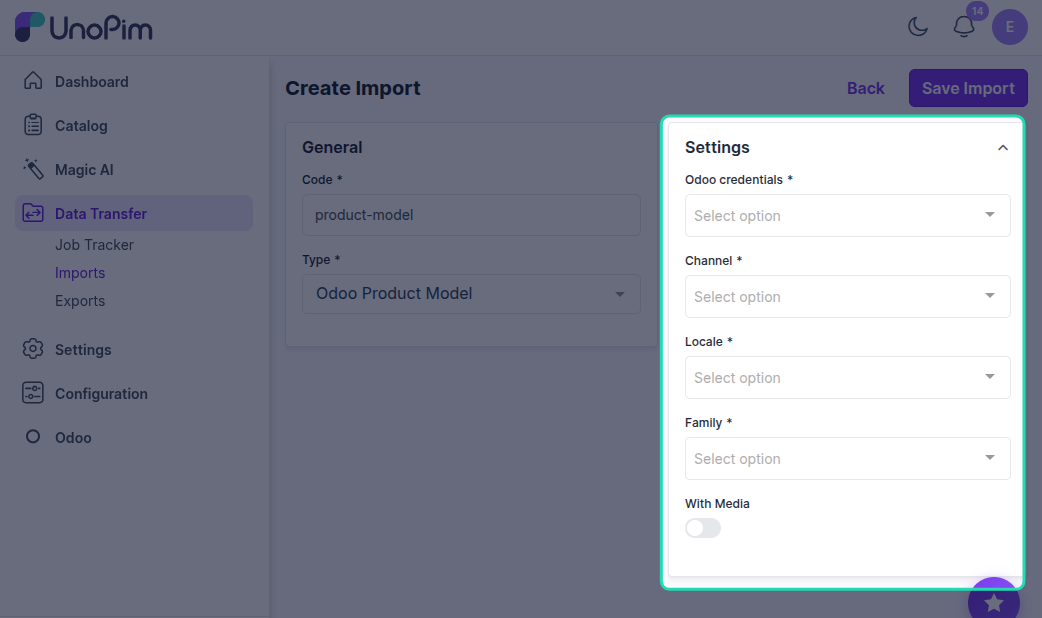
Step 5: Configure Settings
In the Settings section, select the appropriate channel, locale, and currency for importing Odoo products to UnoPim.
Odoo Credentials
Click on the Odoo credentials dropdown and select the specific Odoo credentials or connection you want to import from. This is a required field.
Channel
Click on the Channel dropdown and select the appropriate channel or store view from your Odoo setup. This is a required field.
Locale
Click on the Locale dropdown and select the language or regional settings for imported product data (e.g., English, Spanish). This is a required field.
Family
Click on the Family dropdown and select the product family where you want to import product models. This is a required field.
With Media
Toggle the With Media option to choose whether to import product models along with their images and media files.
- ON - Import product models with all associated images and media files
- OFF - Import product models without media files
Step 6: Save Import
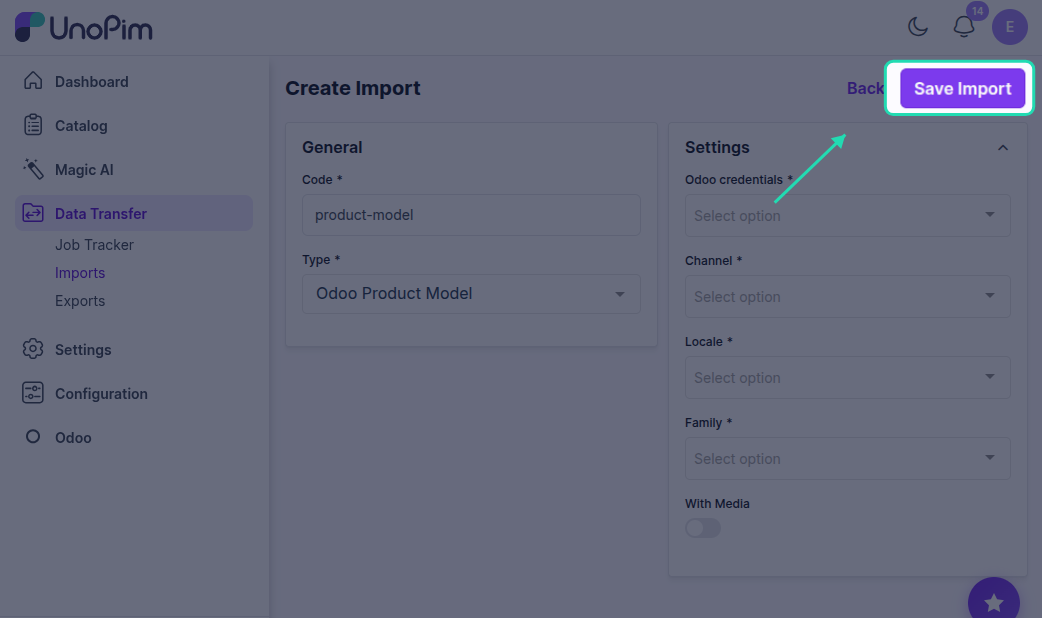
Click the Save Import button to save your import profile configuration.
Step 7: Import Now
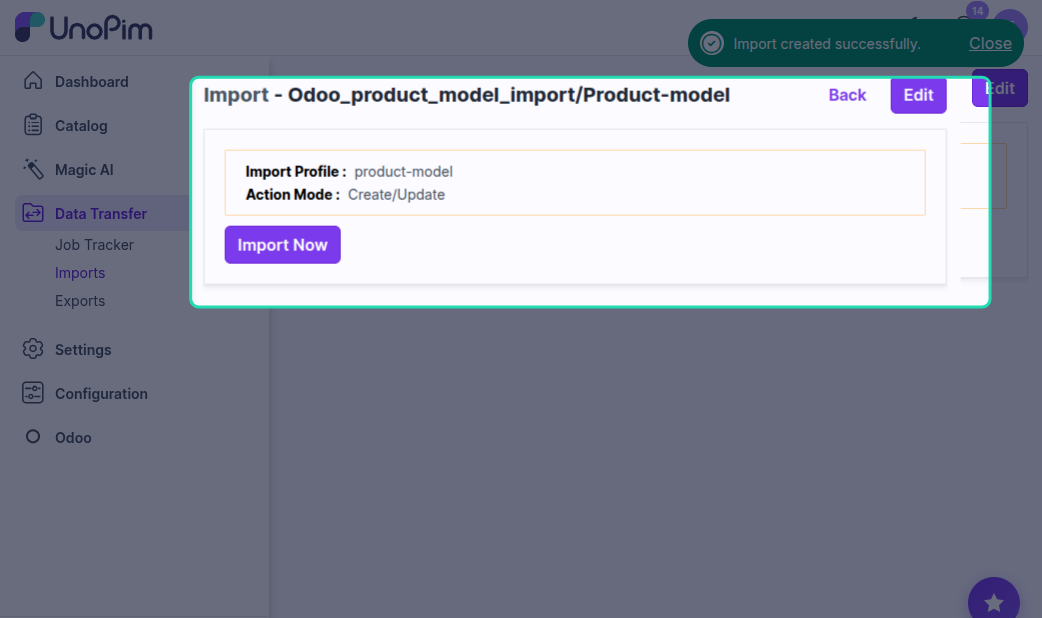
Once the import profile is saved, click the Import Now button to execute the import process and import all product models from Odoo to UnoPim.
Step 8: Monitor Progress
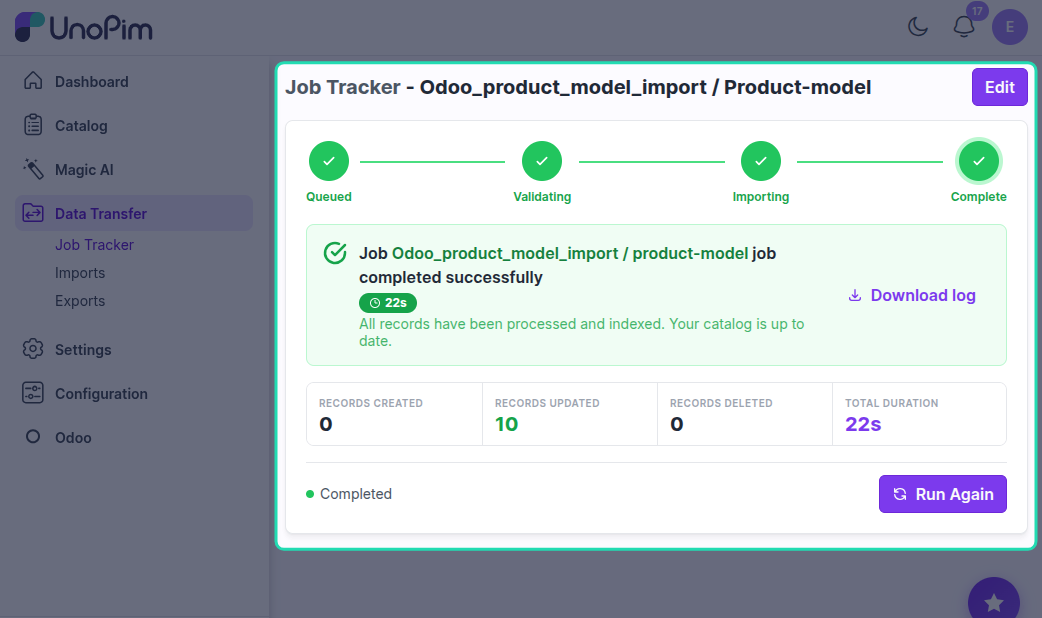
In the execution process, you can check the progress of the import job and view any errors in the log.
Benefits of Using Filters
These filters give you fine-grained control over your imports, making it easier to:
- Manage localized catalogs
- Handle multi-channel data
- Organize media-rich content
- Avoid overloading your UnoPim workspace